
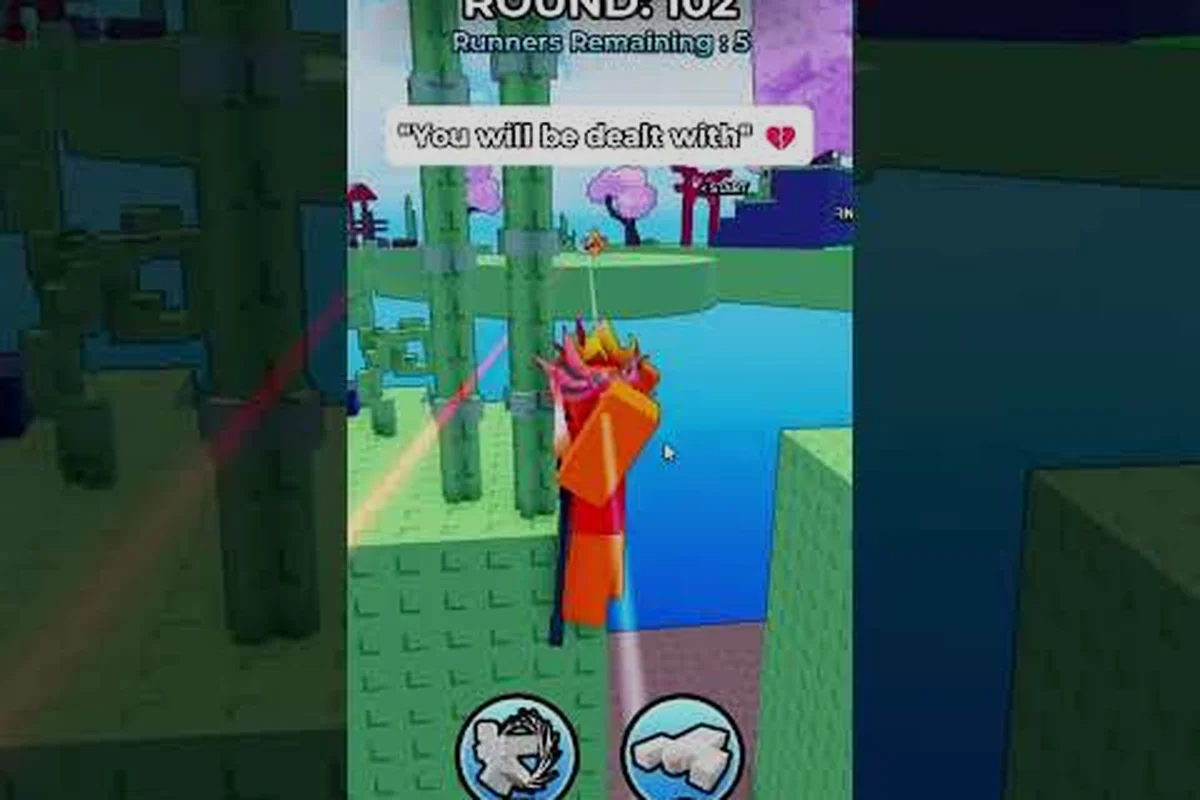
Mastering snipers vs runners leading shots is the single biggest skill gap between a sniper who racks up eliminations and one who watches runners cross the finish line. Because runners move in predictable lanes with a fixed sprint speed, every miss is a math problem you failed to solve, not a reflex issue. This guide breaks down the exact sensitivity values, scope settings, and aim-ahead distances you need to dominate the snipers vs runners sniper meta in the current build.
The official Snipers Vs Runners! Roblox page confirms the core loop: runners sprint across an open course while the sniper holds elevated sightlines from the center. With 3.96M+ visits and a steady 4.4K concurrent player base, the competition is real, and the players who win consistently are the ones who have internalized how to lead their shots. Get the math right, and you will turn the open field into a no-go zone.
The Core Physics of Snipers Vs Runners Leading Shots
Every projectile in Snipers Vs Runners! travels at a fixed velocity, which means your crosshair must sit ahead of the runner's current position to land a hit. The distance you lead depends on three variables: the runner's speed, the distance to the target, and your projectile's travel time. Understanding this relationship is the foundation of snipers vs runners how to hit runners consistently.
Runners move at roughly 22 studs per second in a straight sprint, and the sniper rifle's projectile takes about 0.15 seconds to cover 100 studs. That means a runner crossing your sightline at 150 studs away needs a lead of roughly 5 studs — about one and a half body widths. Most new snipers aim directly at the runner's chest, which is why they miss by a hair every single time.
| Distance to Runner | Projectile Travel Time | Required Lead (Studs) | Visual Reference |
|---|---|---|---|
| 50 studs | 0.075s | 1.7 studs | Half a body width |
| 100 studs | 0.15s | 3.3 studs | One body width |
| 150 studs | 0.225s | 5.0 studs | One and a half body widths |
| 200 studs | 0.30s | 6.6 studs | Two body widths |
| 250 studs | 0.375s | 8.3 studs | Two and a half body widths |
The table above assumes a flat sprint with no abilities active. When runners activate speed boosts or smoke screens, the math shifts dramatically, and you need to adjust your lead on the fly. The key insight is that snipers vs runners moving targets are not random — they follow lane patterns that you can predict and punish.
Estimating Runner Speed and Direction
Runners rarely sprint in a perfectly straight line because they know the sniper is watching. The best runners use a zigzag pattern, cutting left and right every few strides to throw off your aim. However, these cuts are rhythmic, and once you recognize the cadence, you can time your shot to land exactly where their head will be.
The most common runner pattern is a three-stroke weave: two quick cuts in one direction, then a hard cut back. If you track the first two cuts and fire as they commit to the third, you will catch them mid-transition when they are most vulnerable. This is the core technique behind consistent snipers vs runners leading shots at medium range.
Sniper Sensitivity Settings for Consistent Hits
Your mouse sensitivity directly controls how precisely you can track a moving target and apply the correct lead. If your sensitivity is too high, you will overshoot the lead distance; too low, and you will under-rotate and fire behind the runner. Finding the sweet spot requires understanding how sensitivity scales with distance.
The game's default sensitivity sits at 0.5, but most competitive snipers run between 0.35 and 0.45 for long-range precision. The trade-off is that lower sensitivity makes close-range snap shots harder, which matters when a runner gets within 50 studs. You need a setting that lets you track smoothly at range while still allowing quick flicks for close encounters.
| Sensitivity Value | Strengths | Weaknesses | Best For |
|---|---|---|---|
| 0.30 – 0.35 | Extremely precise tracking | Slow to rotate for close targets | Long-range sightlines, open maps |
| 0.36 – 0.45 | Balanced tracking and flicks | Requires practice to master | All-round play, most players |
| 0.46 – 0.60 | Fast snap shots | Overshoots at long range | Aggressive sniping, close-quarters |
| 0.61+ | Very fast rotation | Nearly impossible to lead accurately | Not recommended for sniping |
Scope Settings That Complement Your Sensitivity
The scope magnification works together with sensitivity to determine your effective tracking speed. At 2x zoom, your effective sensitivity is halved, which means a 0.40 base sensitivity feels like 0.20 while scoped. At 4x zoom, it feels like 0.10, which is extremely slow for tracking runners who are weaving.
Most competitive snipers use 2x zoom as their primary scope setting because it balances target size with tracking speed. The 4x zoom is only useful for stationary targets or runners who are moving directly away from you, where lateral movement is minimal. If you find yourself missing shots while scoped, your zoom level may be working against your sensitivity.
| Scope Zoom | Effective Sensitivity (at 0.40 base) | Best Use Case | Drawback |
|---|---|---|---|
| 1x (hipfire) | 0.40 | Close-range snap shots | Small target at range |
| 2x | 0.20 | Medium-range tracking | None significant |
| 4x | 0.10 | Long-range stationary targets | Too slow for weaving runners |
| 8x | 0.05 | Extreme range only | Nearly unusable for moving targets |
The snipers vs runners sniper scope settings that work best for most players are 2x for general play and a quick toggle to 1x when a runner closes distance. This setup keeps your tracking smooth while scoped and allows fast reactions when you need to snap to a nearby target. For a deeper dive into the full range of configuration options, check out the best settings guide which covers everything from graphics to keybinds.
FFA Sniper Strategies for the Open Field
Free-for-all mode is where snipers vs runners ffa sniper play shines, because you have no teammates to coordinate with and every elimination is pure individual skill. The open field layout gives you sightlines across the entire course, but it also means runners can come from any direction at any time. Your positioning and target priority determine your elimination count more than raw aim.
The best FFA snipers hold the central elevated platform because it offers sightlines down both main lanes and the interior shortcut. From this position, you can cover roughly 70% of the course without moving, which means you spend more time shooting and less time repositioning. The trade-off is that you become a predictable target for runners with long-range abilities, so you need to stay mobile between shots.
Target Priority and Lane Control
Not all runners are equal targets, and the order you engage them determines your overall elimination efficiency. The highest-value targets are runners who are closest to the finish line, because eliminating them denies the most progress. However, they are also the most likely to use defensive abilities, so you need to factor in their cooldown state.
| Target Type | Priority | Engagement Range | Notes |
|---|---|---|---|
| Runner at 75%+ progress | Highest | Any range | Denies near-certain points |
| Runner using speed boost | High | Medium range | Predictable straight-line path |
| Runner weaving erratically | Medium | Close range | Harder to hit, lower value |
| Runner in smoke screen | Low | Skip | Cannot track reliably |
| Runner at spawn | Lowest | Long range | Low value, easy to hit |
The snipers vs runners sniper meta in FFA rewards aggressive target selection over raw accuracy. A sniper who lands 60% of shots on high-progress runners will outscore a sniper who lands 80% on fresh spawns. This is because the point differential between a runner at 75% progress and one at 10% is massive, and every elimination at the finish line swings the match.
Positioning That Maximizes Your Sightlines
While the central platform is the default choice, the best FFA snipers rotate between three or four positions to keep runners guessing. Each position offers different sightlines, and the rotation prevents runners from pre-aiming your location. The key is to move after every two or three shots, because that is how long it takes a skilled runner to pinpoint your position.
The left flank perch offers a clean sightline down the left lane but leaves the right lane completely uncovered. The right flank perch mirrors this for the opposite side. The back platform covers the spawn area but has poor sightlines to the finish line. Rotating between these positions every few shots keeps runners off-balance and forces them to check multiple angles before committing to a lane.
Advanced Leading Techniques for Moving Targets
Once you have mastered the basic lead distances and sensitivity settings, the next level of snipers vs runners leading shots involves predicting ability usage and adjusting your aim mid-shot. The best runners will activate speed boosts or decoys at critical moments, and your ability to read these tells separates you from the average sniper.
Speed boosts are the most common ability that disrupts your lead calculation. When a runner activates a speed boost, their movement speed increases by roughly 40% for three seconds. This means your standard lead distance needs to increase by 40% during that window, which is a significant adjustment at longer ranges. Watch for the visual cue — a blue aura around the runner — and extend your lead accordingly.
| Ability | Speed Change | Lead Adjustment | Visual Cue |
|---|---|---|---|
| Speed Boost | +40% | Increase lead by 40% | Blue aura |
| Smoke Screen | No change | Cannot track | Grey cloud |
| Decoy | No change | Target the real runner | Ghost image |
| Shield | No change | Requires two shots | Golden glow |
The snipers vs runners how to hit runners question becomes more complex when decoys enter the equation. A decoy creates a ghost image that runs alongside the real runner, and if you shoot the decoy, your shot is wasted. The real runner is always slightly behind the decoy and has a subtle transparency difference that becomes visible with practice. Focus on the runner's shadow — the decoy does not cast one, which is the most reliable way to distinguish them.
The Art of the Pre-Fire
Pre-firing is the technique of shooting at a location where you predict a runner will be, rather than where they currently are. This is the highest-level application of snipers vs runners leading shots, because it requires reading the entire course layout and anticipating runner decisions. The most common pre-fire points are lane intersections, where runners must commit to a direction, and the final stretch before the finish line.
The final stretch is the highest-value pre-fire location because every runner must pass through it, and they are usually sprinting in a straight line at that point. Position your crosshair at the entrance to the stretch, wait for a runner to enter your sightline, and fire the moment they commit to the straight path. With a 2x scope and 0.40 sensitivity, you can track them through the entire stretch and time your shot for maximum accuracy.
Practical Drills to Improve Your Accuracy
Improving your snipers vs runners leading shots requires deliberate practice, not just playing matches and hoping for improvement. The most effective drills isolate specific skills and build them up through repetition. Set aside 15-20 minutes before your ranked sessions to run through these drills, and you will see measurable improvement within a week.
The stationary tracking drill involves picking a spot on the map where runners frequently pass and practicing your lead on every runner that crosses. Do not fire — just track them with your crosshair at the correct lead distance. This builds muscle memory for the lead distances at various ranges. After five minutes of tracking, start firing and note your hit rate.
| Drill | Duration | Focus | Success Metric |
|---|---|---|---|
| Stationary Tracking | 5 minutes | Lead distance memory | Smooth tracking, no overcorrection |
| Weave Prediction | 5 minutes | Reading zigzag patterns | Hit rate on weaving runners |
| Ability Reaction | 5 minutes | Adjusting for speed boosts | Hit rate during boost windows |
| Pre-fire Practice | 5 minutes | Anticipating runner paths | Eliminations at lane intersections |
The weave prediction drill focuses on the three-stroke weave pattern discussed earlier. Find a runner who is weaving consistently and track their pattern for two full cycles, then fire on the third cycle at the exact moment they commit to the direction change. This trains your timing for the most common evasion pattern in the game.
Analyzing Your Misses
Every miss is data, and the best snipers analyze their misses to identify systematic errors. The most common miss types are under-leading, over-leading, and mistiming the shot. Under-leading means your shot landed behind the runner, which indicates your lead distance is too short. Over-leading means your shot landed in front, indicating too much lead. Mistiming means you fired at the wrong moment in the runner's movement cycle.
Keep a mental log of your miss patterns for each map and distance. If you consistently under-lead at 150 studs, increase your lead by one stud and test again. If you over-lead on weaving runners, wait a fraction of a second longer before firing. These micro-adjustments compound into significant accuracy improvements over time.
Frequently Asked Questions
What is the best sensitivity for snipers vs runners leading shots?
The best sensitivity for most players is between 0.38 and 0.42 with a mouse DPI of 800-1600. This range balances smooth tracking for leading shots with enough speed for quick flicks. Start at 0.40 and adjust in small increments until your accuracy stabilizes.
How do I hit runners who are weaving back and forth?
Runners who weave follow a rhythmic pattern, typically a three-stroke cycle. Track their first two cuts, then fire as they commit to the third direction change. This catches them mid-transition when they are most vulnerable and cannot change direction again.
Should I use 2x or 4x scope for moving targets?
Use 2x zoom for most engagements because it maintains your effective sensitivity for tracking. The 4x zoom halves your tracking speed, making it difficult to lead runners who are moving laterally. Reserve 4x for stationary targets or runners moving directly away from you.
How much lead do I need at 150 studs?
At 150 studs, you need roughly 5 studs of lead, which is about one and a half body widths. This assumes a runner sprinting at base speed with no abilities active. Adjust your lead by 40% when a runner activates a speed boost.
What is the best position for FFA sniping?
The central elevated platform dominates sightlines, but hold it sparingly—after two or three shots, slide to a flank perch. Runners will pre-aim your last spot, so lead them diagonally: fire where their strafe path intersects your reticle, not at their current sprint.